
Intimacy 1:
a study in care
Two people meet—one longing for what might last. The other unsure. Between us, a space opens; not to fix or define, but to listen, to move, to stay. We arrive with different questions and let the body hold what words cannot.
I met Dinne at the Soho Contact Improvisation Jam.
He was dressed in white, absorbed in a solo investigation at the center of the room. I felt drawn to dance with him, but instead of entering his space, I began my own solo nearby—listening, watching, letting proximity do its work. Without force or intention, our paths met.
What followed was a careful, attuned dance. We moved close to the ground, shared weight, and listened through touch. There was familiarity in the way our bodies met—an ease, a mutual care.
After the jam, we exchanged a few words. He had just arrived from the Netherlands and was beginning an exchange semester at Pratt Institute. It was only his second day in New York. We shared contact information and went our separate ways.
Some time after that, we ran into each other again at the same jam and shared another dance—one that felt like a continuation, despite the time between. That continuity felt rare. Afterward, we rested on the floor, lying shoulder to shoulder with our feet up the wall. I turned to him and asked if he would be interested in collaborating with me. He said yes.
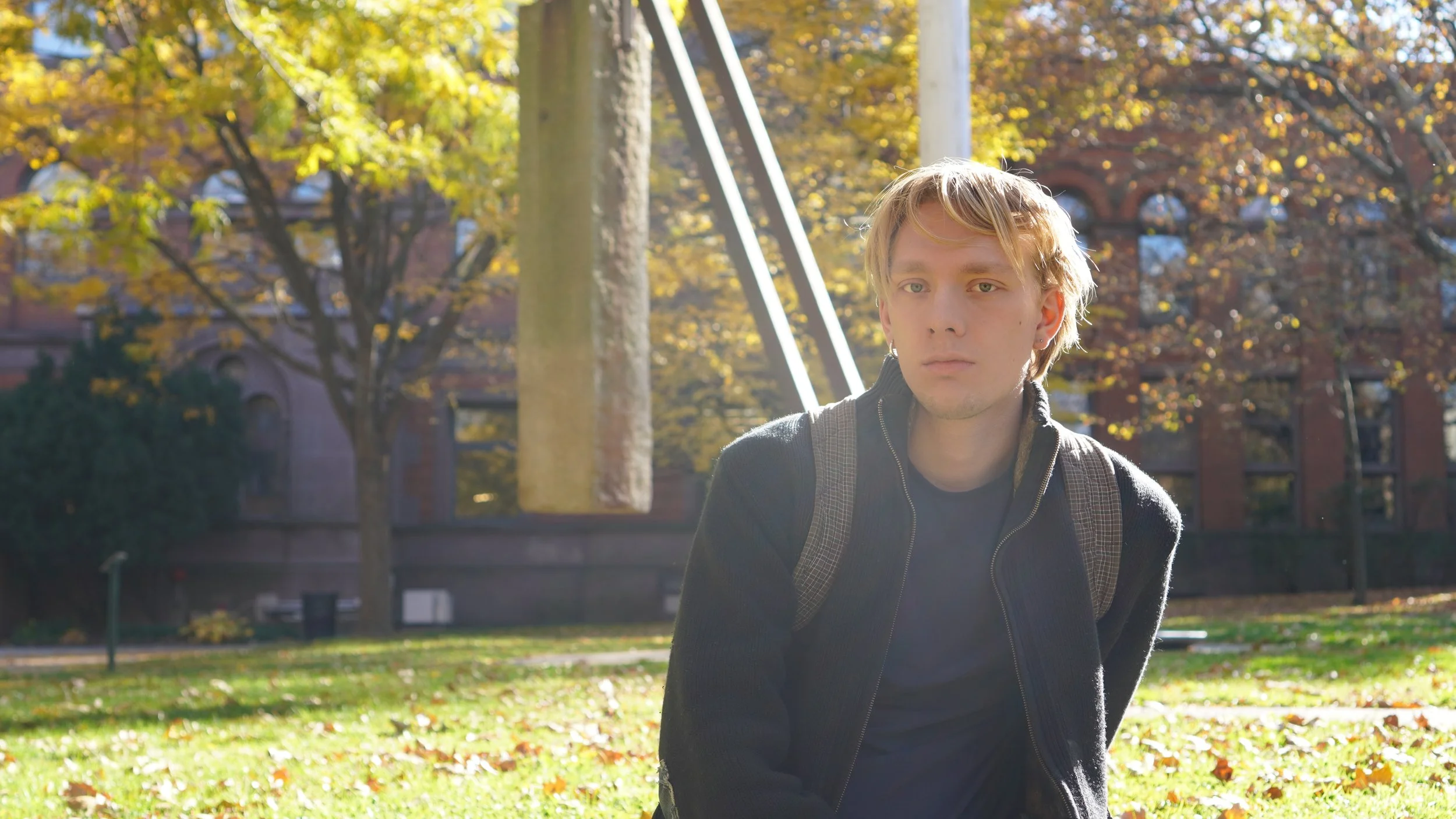
When the jam ended, he spoke to others about our collaboration. That small gesture made me feel seen and valued. I climbed onto the side of his bicycle and we rode to get dumplings. Over food, I shared the idea for the Intimacy Series. From there, conversation unfolded easily—stories of our lives, our hesitations, our complicated relationships to intimacy itself. We saw a dance performance together, had a beer afterward, and our collaboration began.
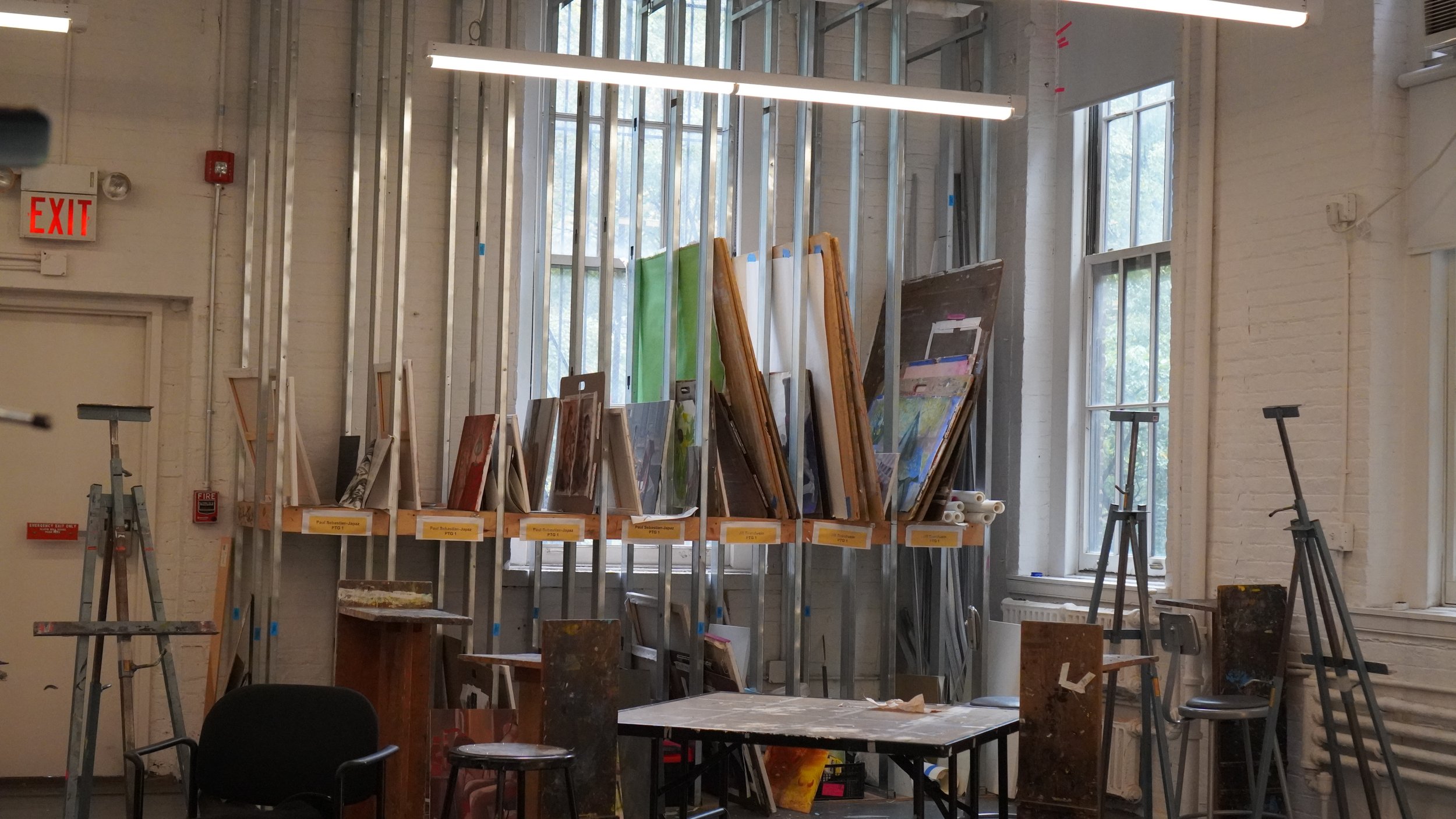
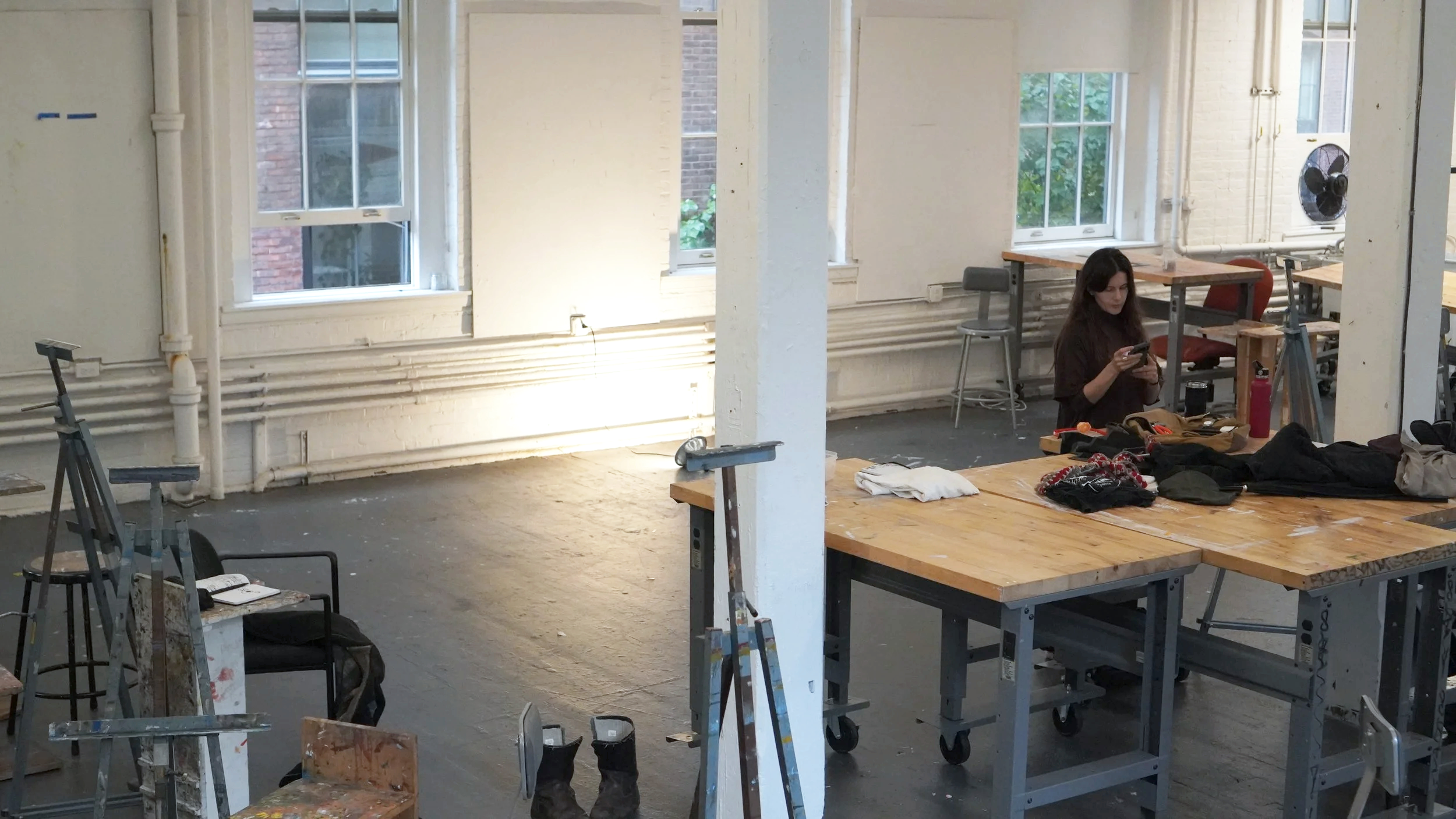
From then on, we met every Saturday in an empty painting studio at Pratt Institute. Our rehearsals were rooted in dialogue—physical and spoken.
We would begin by dancing, often while talking, circling philosophical questions alongside personal stories. Our lives were very different, shaped by different cultures and trajectories, and because of that, we rarely offered advice. Instead, we listened. We held. We related.
The work lived in that space: between movement and conversation, between difference and recognition. We shared the practice publicly in December, at the end of his semester. Shortly after, he returned to Europe.
What remains is the imprint of a meaningful entanglement—one shaped by timing, attentiveness, and the quiet trust that can emerge when two paths cross, converge, and eventually part.
What aspect of intimacy do we struggle with?
-
For me, it’s the yearning for something to last — a moment, a feeling, a relationship. I’ve learned to embrace the beauty of impermanence, but my heart hasn’t caught up. There’s a quiet sadness in that.
I open easily and deeply — it’s my gift. I make people feel seen, safe, and heard, and they open in return. Those exchanges, even the smallest ones — an eye contact that lingers, a shared laugh about something trivial — they make me feel alive, present, connected.
But when the day ends, I come home alone. And the weight of that aloneness is real. These moments of intimacy offer temporary warmth in the cold of solitude. I hold them tightly, not because I mistake them for permanence, but because they remind me I’m still capable of deep feeling, even in the fleeting.
-
I want to experience everything deeply and meaningfully. But sometimes it feels hard to care for someone so deeply when there’s already so much happening, and so many others who are also worth caring for. There’s a weight to it — a responsibility that comes with love and connection — and I often feel both drawn to it and challenged by it.
I find myself caught between the present and the future, between wanting to be fully here and already thinking about what comes next. It’s difficult to stay rooted in a moment when I know it won’t last forever.
The truth is, I’m not entirely sure what I want, and that uncertainty frustrates me. Still, I try to stay open — to feel, to care, to remain curious — even when I don’t have the answers.
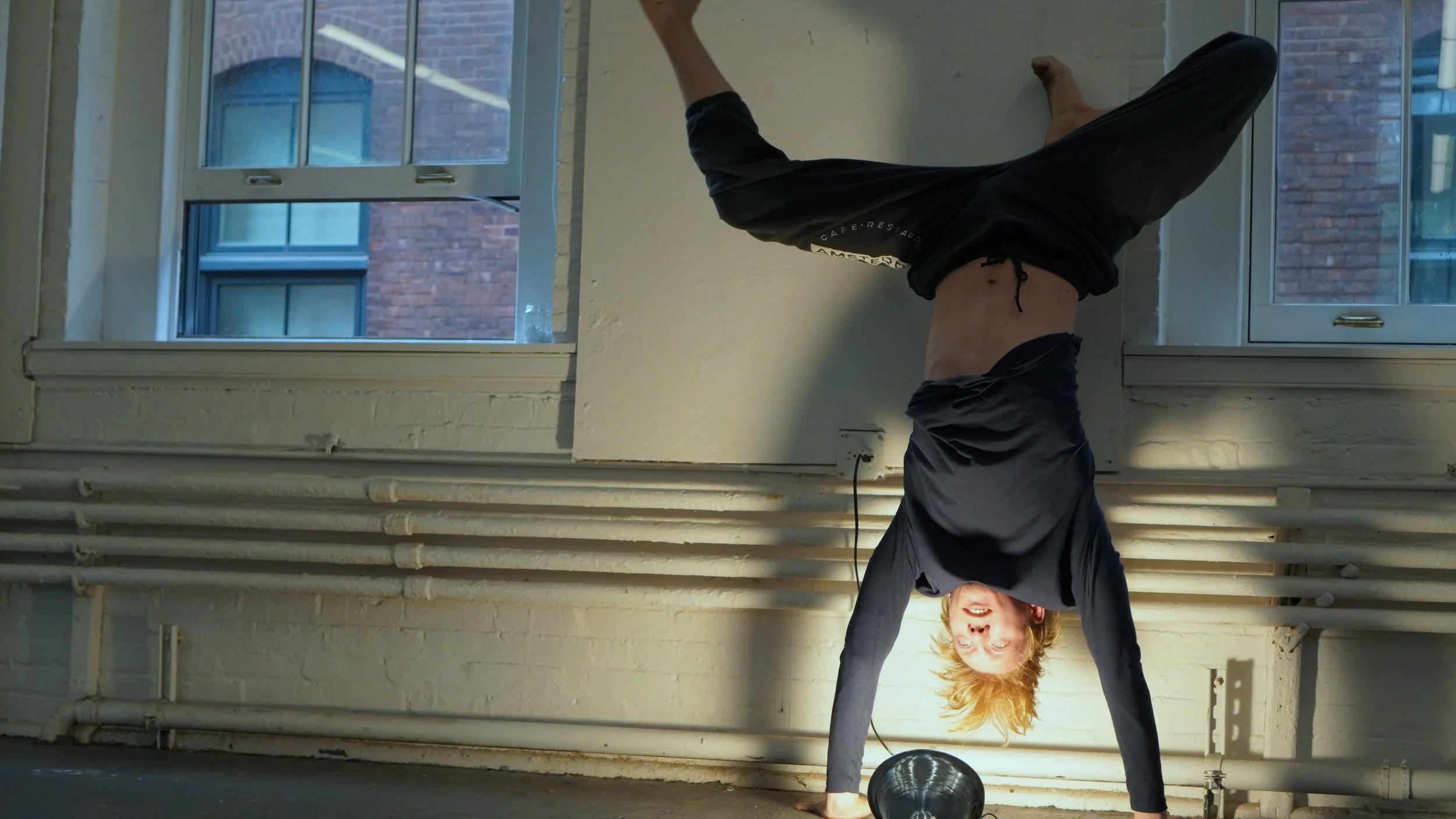
What happens when one person longs for permanence and the other fears it? Can intimacy exist not in holding on, but in the act of meeting — again and again, knowing it will fade?
-
Moving in and out of contact. Each return is a choice—either to resist or to embrace reconnection.
-
One body remains in contact while the other moves away, maintaining a thread of attention between distance and touch.
-
Attentive listening allows the rhythm to shift at any moment. One way this change emerges is through an unexpected lift.

The photographs and videos were taken during the creative process in and out of the painting studio by Dinne and me.